
Knowledge base — swap bodies
Structured information on swap bodies, combined transport (KV) and intermodal logistics in Europe — domain knowledge without advertising, with sources cited and explained in our own words.
Topics
Foundations
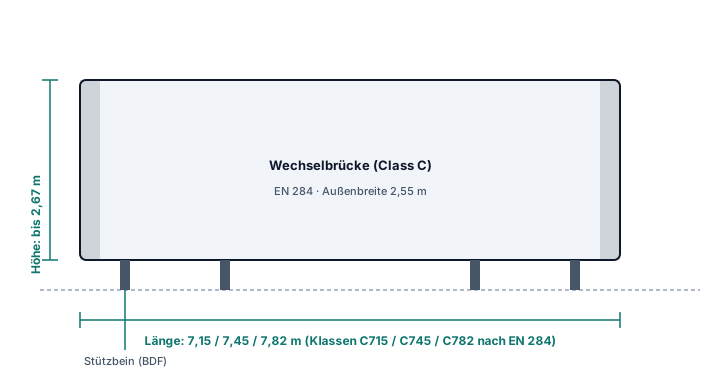
- What is a swap body? — definition, classes, construction, BDF system, advantages and limits, with five schematic drawings.
- Advantages of swap bodies — the twelve most important operational and capital-efficiency advantages, sorted by lever.
Deeper engineering
- Engineering of the swap body — BDF standard in detail, support legs, gripper edges, corner reinforcements, telematics.
- Markets: DE, PL, EU — fleet and volumes in Europe, the Hamburg–Milan and Rotterdam–Warsaw corridors, growth drivers 2026.
- Regulation & standards — EN 284, ISO 668, EU Directive 92/106/EEC, ADR (dangerous goods), road toll with CO₂ component, ETS 2, CSRD, customs T1.
- Swap bodies in transport infrastructure — Europe's "new light transport infrastructure", three growth drivers, asset class.
For practitioners
- Swap bodies for forwarders — peak load vs. base load, KV economics from 300 km, telematics 2026.
- Swap bodies as an asset class — market structure, leasing models, growth drivers, risks.
News & reference
- Market briefings — starting with Axis Insights #1.
- Glossary — more than 70 technical terms from ADR to twin, filterable by alphabet.
- FAQ — the most common questions from practice.