
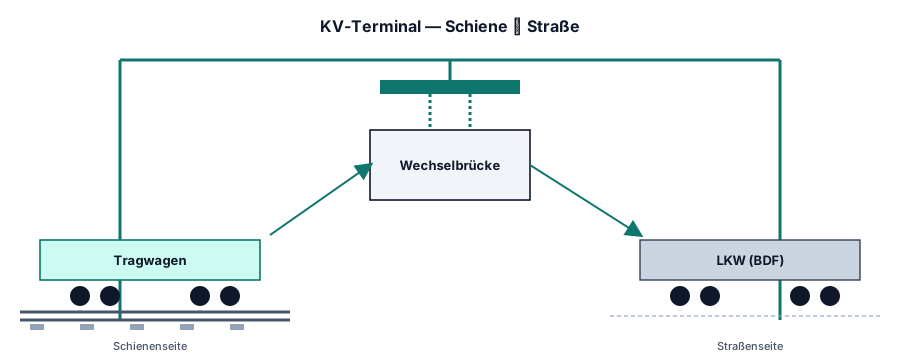
Europe's two infrastructures
When most people hear „transport infrastructure", they think of rails, motorways, ports and bridges — the heavy, durable structures that physically connect economies. But every tonne of freight moved along those arteries needs a second component that is often overlooked: a vessel standardised enough to switch between modes, and light enough not to become a burden itself.
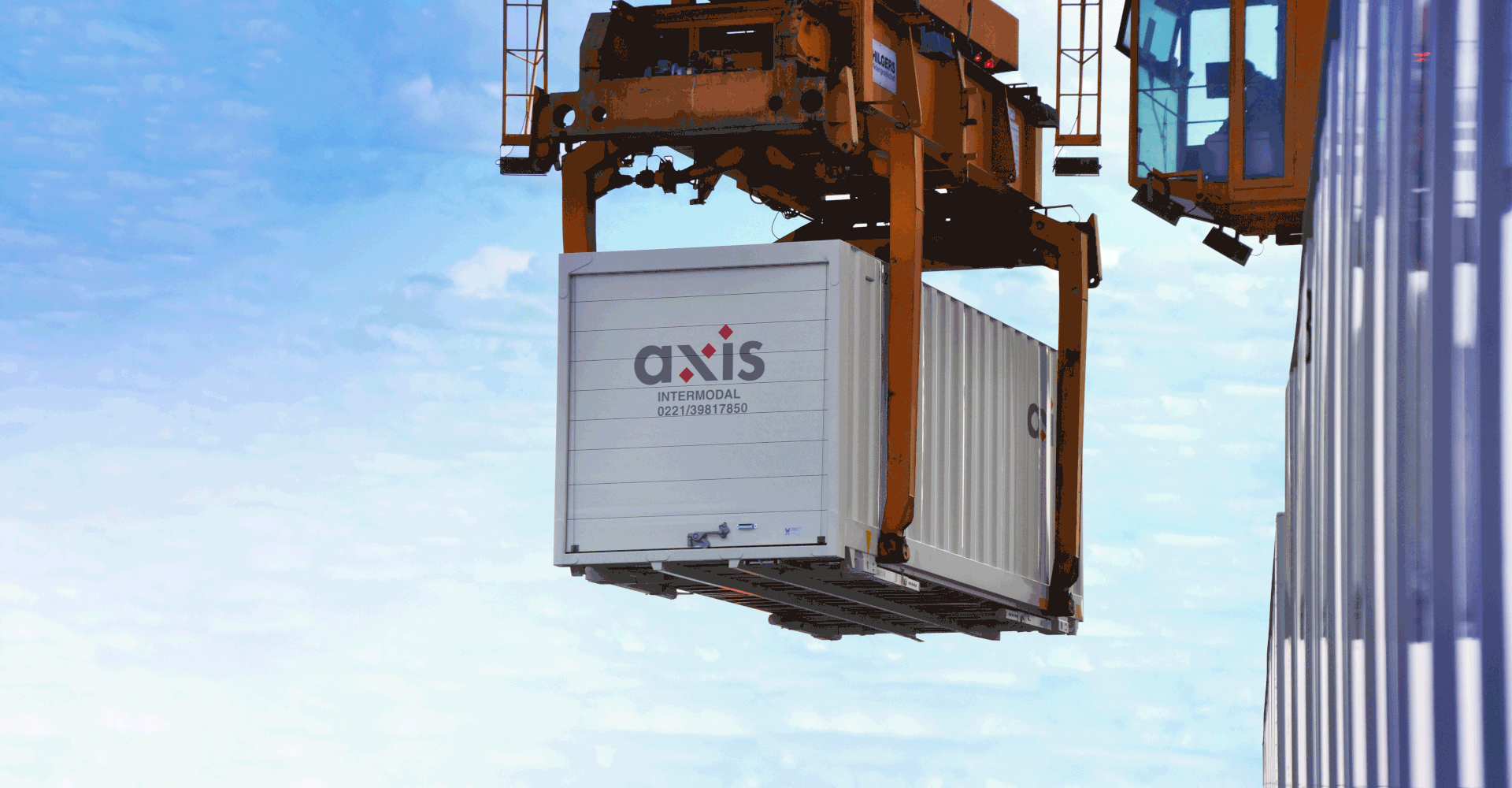
This is the light transport infrastructure — containers, swap bodies, semi-trailers, crane-handleable trailers. It is the overlooked counterpart to heavy infrastructure, and it determines whether the investments in rail and ports actually deliver economic leverage. A rail line without compatible load units is an empty promise; a swap body without a KV terminal is a parked block of steel.
Swap bodies in the corridor network
On Europe's main KV corridors — Hamburg–Milan, Rotterdam–Warsaw, Antwerp–Halle, Cologne–Verona — swap bodies are the dominant tool of modal change. Heavy infrastructure (rail) is used most intensively where light infrastructure (swap bodies plus KV terminals) simultaneously enables the switch to road. That is not coincidence; it is the system.
In numbers: estimates of the European swap-body fleet range from 250,000 to 400,000 units; each is potentially in modal change several times a week. The order of magnitude is comparable to that of the ISO containers carried on European rail line-hauls — an indication that swap bodies are not a niche but a pillar.
Three drivers raising the value of this infrastructure in 2026
1. Political modal-shift pressure
The EU pursues a substantial shift of road freight to rail. Three levers act in parallel: the German lorry toll with its CO₂ component since December 2023, the EU emissions trading scheme extending to road transport in 2027 (ETS 2), and national KV-funding programmes in Germany (BMDV), Austria, the Czech Republic, Poland and Italy. They make pure road haulage more expensive and improve the economics of crane-handleable swap bodies in KV.
2. ESG and CSRD reporting
From financial years 2024/25, the Corporate Sustainability Reporting Directive (CSRD) obliges industrial shippers to report Scope 3 emissions in audit-grade form — including transport. The most reliable reduction path is a higher rail share, and that only works at scale via crane-handleable load units. The swap body therefore becomes a structurally demanded ESG instrument — not from idealism, but from regulatory obligation.
3. Parcel/express seasonality
The German parcel/express sector again handled more than four billion shipments in 2024; volume growth has flattened, but volatility has risen. Black Friday, pre-Christmas peaks and shorter promotional cycles make pooling models for swap bodies more attractive than pure own fleets. Covering peaks in-house means running 8 to 9 months of overcapacity; pooling smooths utilisation.
An asset class with political tailwind
Swap bodies have three properties that institutional investors and family offices appreciate: low correlation to equity markets, a very linear depreciation curve over 12 to 15 years, and a liquid European secondary market made possible by EN 284 standardisation. A 10-year-old swap body is not „ten years old" — it is 50 percent through its lifecycle and re-rentable in any European industrial region.
This dual nature — physically standardised infrastructure and liquid tangible asset — is what makes swap bodies a strategic investment in the current market cycle. Whoever buys, leases or operates them invests not in transport equipment, but in a node of European transport infrastructure — in a regulated asset class with a return profile that has been stable for decades, and three growth drivers that all act simultaneously.
Going deeper: Advantages · For forwarders · For investors · Market briefing