
Three market movements decide in 2026 which forwarder gains margin and which loses it: the spread between baseload and peak in parcel/express, the shift of the KV economic threshold towards shorter distances — and the move of telematics from premium option to standard requirement. Read the three correctly, and you build your fleet differently than you would have five years ago.
This page summarises what we see in open market data and authorised industry sources for fleet operators — operationally, in numbers, with a checklist at the end.
Swap bodies in the fleet — practice 2026
The economically relevant question in 2026 is not „how many swap bodies do we need" but „how much baseload do we keep — and how do we flex the rest". This page distils what we see in open market data and authorised industry sources for fleet operators.
Peak vs. baseload — the decisive lever
Germany's parcel/express sector again handled over four billion shipments in 2024. More important than the absolute volume is the spread: between baseload (February–October, no special promotions) and peak (Q4, Black Friday, pre-Christmas), most fleets see 20 to 35 percent. Cover the peak fully with own equipment and you run 8 to 9 months of overcapacity — every standstill costs capital, insurance, parking and maintenance cycles that are never called.
The three-pillar model for peak coverage
- Own fleet for the baseload — about 65 to 75 percent of typical utilisation. Equity pays off here because utilisation stays above 85 percent over the year.
- Long-term rental for predictable seasonality — three to six months operating lease covers e.g. the Q4 peak without year-round capital tie-up.
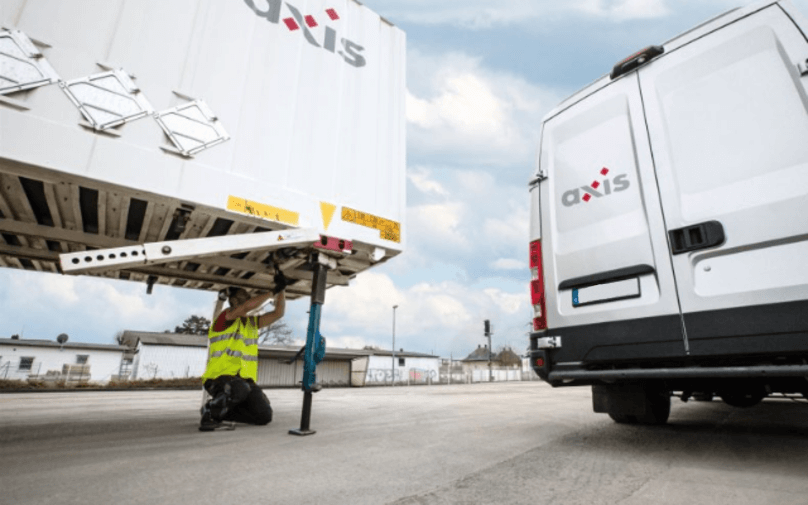
- Short-term pooling/spot rental for peaks and promotions — week-by-week, often including GPS and UVV. Premium pricing, but no risk if volume drops.
KV economics tip below 300 km
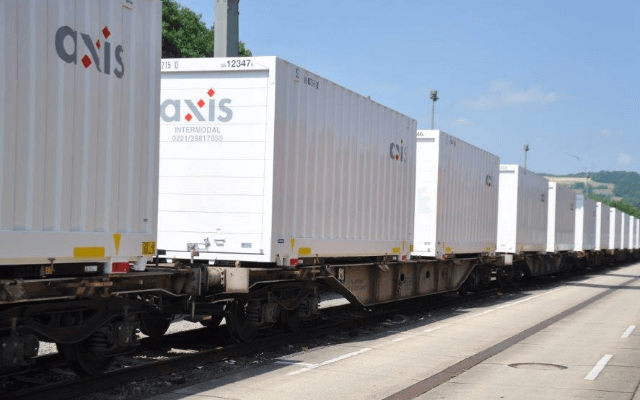
Germany's lorry toll has been extended with a CO₂ component since December 2023. For Euro-6 vehicles, toll increases up to 83 percent have been documented depending on axle count and route. On many relations beyond 300 km the economics now tip towards rail — provided crane-handleable, KV-approved swap bodies are in the fleet. Operating without crane-handleable units in 2026 means locking yourself out of a concrete margin lever.
Telematics: no longer premium in 2026
In larger rental fleets more than half of swap bodies now carry solar-powered GPS modules. Three drivers:
- Insurers increasingly require localisation evidence for larger fleets — without it, premiums rise or coverage is denied.
- Shippers demand container-level track & trace in tenders.
- Dispatch saves measurably: 5 to 12 percent reduction in empty time is realistic, because parked units no longer need to be searched for.
Anyone investing in own fleet in 2026 should therefore include GPS as a mandatory specification component, not an option. (Paraphrased from Axis Insights #1, January 2026.)
Practical specification checklist
- EN 284 Class C745 as default; C715 only for city traffic, C782 for volume freight
- Crane-handleable and KV-approved — without it, no rail line-haul
- Code XL body for cargo securing, if industrial inbound is run
- Solar GPS with motion and door sensors as factory option
- Payload reserve: empty weight ≤ 1.9 t for maximum freight share
- UVV plan and maintenance contract clarified with the lessor for pooling/operating lease
More on advantages: Advantages. Market briefing: Axis Insights #1.