
An editorial knowledge base on swap bodies, combined transport, and intermodal logistics in Europe. Fact-driven, sourced — and free of advertising.
„Anyone without crane-handleable units in their fleet over the next twelve months locks themselves out of a margin lever."
Why this is strategic in 2026
The swap body is not just one more piece of transport equipment. It is the interface where Europe's modal-shift policy economically happens — or does not.
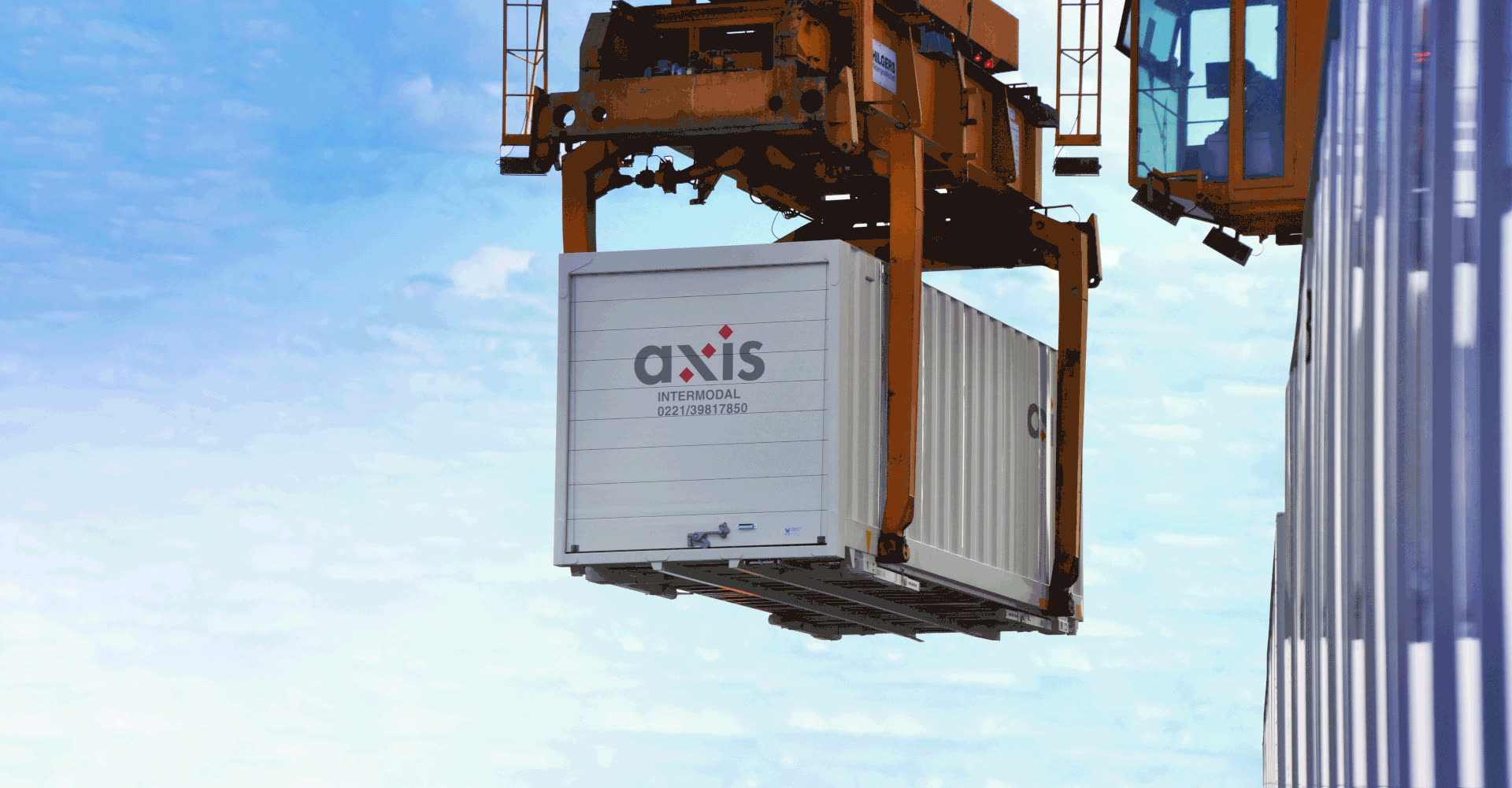
Three movements coincide in 2026: the German lorry toll with its CO₂ component makes pure road transport more expensive, the ETS 2 extension from 2027 adds another carbon price on diesel haulage, and CSRD obliges industrial shippers to report Scope 3 emissions in audit-grade quality. Three levers, one direction — and one tool that opens the economically rational path: the crane-handleable swap body in combined transport.
For forwarders this means: a 300 km threshold for KV economics is currently sliding downwards — anyone operating without crane-handleable units is locked out of a margin lever.
For investors this means: an asset class with low market correlation, a linear residual-value curve over twelve to fifteen years, and a liquid European secondary market — supported by a standardisation regime (EN 284) and three simultaneous growth drivers.
For transport policy this means: without a sufficient stock of crane-handleable swap bodies, modal shift remains theory. Heavy infrastructure (rail, ports, terminals) only delivers its economic effect when the light infrastructure (swap bodies, containers, crane-handleable trailers) circulates the corridor network in sufficient numbers.
Go deeper: Swap bodies in transport infrastructure
What you will find here
European freight transport runs on the choreography of road and rail. The swap body is the tool that lets a thirty-tonne load swap modes in under two minutes — and that is why it has become a structural component of European transport infrastructure. We organise the field into four topic clusters:
- Basics — definition, classes, structure, advantages
- Glossary — over 70 technical terms from BDF to UIRR, with sources
- FAQ — the most frequent questions from practice
- Market briefings — volumes, trends, and players in DE, PL, and the EU
Axis Insights #1 — Market Briefing 2026 — three market movements: KEP growth with peak-load spread, KV economics tipping below 300 km, telematics becomes a baseline.