
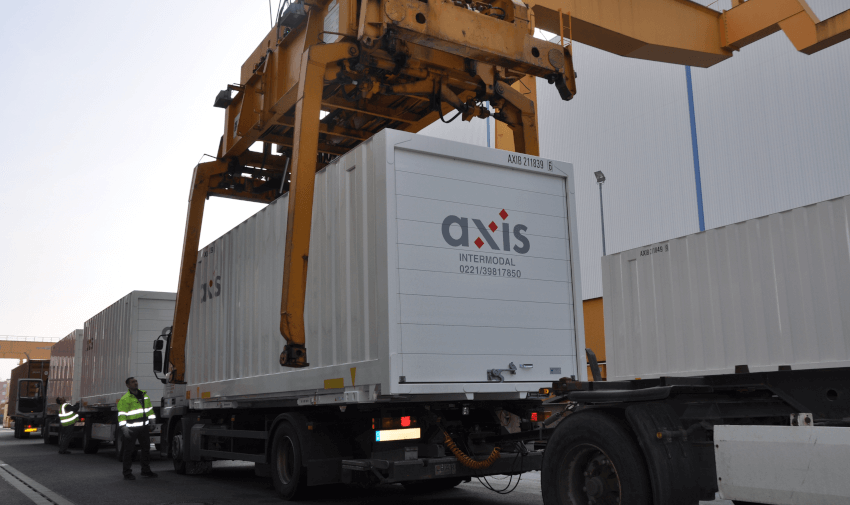
For three decades the same logic has dominated inland European freight: cut standstill, raise asset utilisation, win. The swap body is the tool that does both at once — and it does so by design, not by accident.
Compared to any other load unit it shortens the modal change to under two minutes. It uncouples body and chassis so that both assets work nearly continuously. It is standardised enough to support a liquid secondary market, while staying light enough to carry more tonnes per tour than a semi-trailer or a comparable container. In each of these dimensions it beats the next-best format. Exactly that is why — with rising tolls, sharper ESG reporting and more volatile parcel volumes — it is, in 2026, more strategic than ever, not an outdated tool.
What follows are the twelve concrete advantages — sorted by economic lever.
Why swap bodies — at a glance
In inland European freight transport the swap body has been the leading load unit for three decades because it combines speed, payload and asset efficiency like no other format. Below are the twelve most important operational and investment-side advantages, sorted by saving or revenue lever.
Operational advantages (for forwarders)
1. Modal change in under two minutes
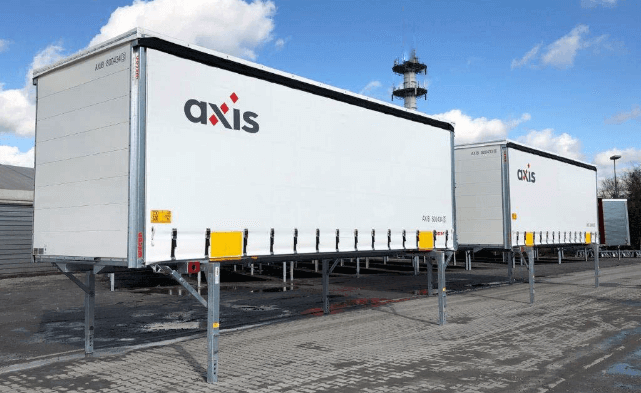
A swap body is set down by the lorry over four support legs without a crane — typical duration: 60 to 120 seconds. Picking up runs at similar speed. Compared with container handling (which needs a crane), this is a dramatic reduction in time lost at the hub and in distribution.
2. Decoupling body and chassis
While the body is being loaded or unloaded, the lorry can run the next tour. The utilisation of tractor and driver rises sharply against the semi-trailer model, where the vehicle is blocked during loading. With swap bodies, drop-and-hook is essentially the default mode.
3. Higher payload per tour
A standard Class C745 swap body weighs around 1.5 to 2 tonnes empty — significantly less than a comparable crane-handleable semi-trailer (~6.5–8 t) or a 45-foot container (~4.5 t). At the same gross combination weight, more tonnes remain for the freight.
4. Low CAPEX and maintenance cost
The simple structure — four legs, a floor, curtain or box — means few moving parts and therefore lower maintenance. Acquisition prices are clearly below those of crane-handleable trailers; UVV inspections are less involved.
5. KV-funding eligibility
Crane-handleable, KV-approved swap bodies qualify for the German federal combined-transport subsidy programme, and for similar programmes in Poland, Austria, the Czech Republic and Italy — provided pre- and post-haulage is properly documented.
6. Low driver training overhead
The BDF system is standardised; drop and pick-up become routine after a short briefing. No special licences (crane operator, reach-stacker) are required.
Strategic advantages (forwarders + investors)
7. CO₂ savings on the rail line-haul
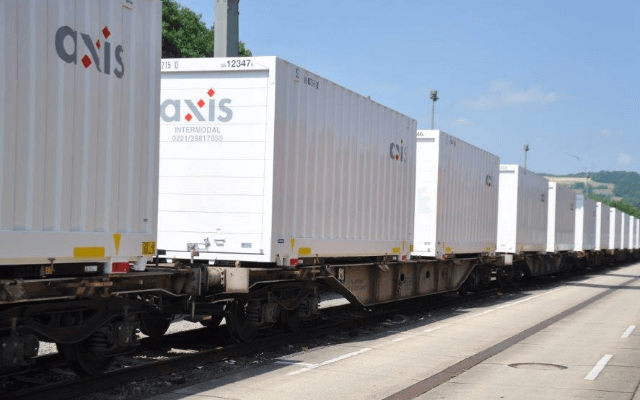
Per tonne-kilometre the rail leg of a KV tour typically saves around two-thirds of the CO₂ emissions of pure road haulage. With CSRD reporting and the extension of the EU emissions trading scheme to road transport (ETS 2) from 2027, this lever becomes economically measurable.
8. Pooling and rental flexibility
Unlike an own fleet, a pool or short-term rental ties up no equity. Peak loads — typical for parcel/express, seasonal groupage or industrial inbound — can be covered without financing 8 to 9 months of overcapacity per year.
9. Standardised form = liquid secondary market
Because EN 284 fixes dimensions and interfaces, a swap body is resaleable, re-rentable and redeployable across the whole of Europe. That makes the asset class liquid for investors — and reduces residual-value risk for forwarders.
10. Residual-value stability over typically 12–15 years
A well-maintained swap body holds economic life of 12 to 15 years in active use; afterwards it is typically reused as a static storage or reserve box. The combination of long lifetime and stable secondary market produces a very linear depreciation curve — unlike trailers with curtain or tyre wear.
11. Scalability for operating-lease platforms
Swap bodies are produced in identical units at scale; the European rental market is consolidated but growing. Lessors can scale fleets in thousands of units without disproportionately diluting per-unit utilisation — provided geographical pool distribution matches the corridor network.
12. Telematics makes dispatch measurable
Solar-powered GPS modules are now installed on the majority of larger lessors' fleets. They reduce empty time, shorten the search for parked units and create the transparency that insurers and shippers expect today — track & trace at container level is increasingly standard in tenders.
Where the swap body cannot win
To be fair, there are clear limits: swap bodies are not stackable, not sea-worthy, and the level of cargo protection depends heavily on the body type (curtain vs. box). For global merchandise trade, stacked port handling or pure long-haul road traffic without a rail leg, ISO containers and semi-trailers remain the right tools. Swap bodies play their strength between industry, KV terminal and distribution centre — exactly where European transport infrastructure demands the decisive modal change.
See also: What is a swap body? · For forwarders · For investors